
|- axel.japan.report.live aus tokyo -|
The 47 samurai
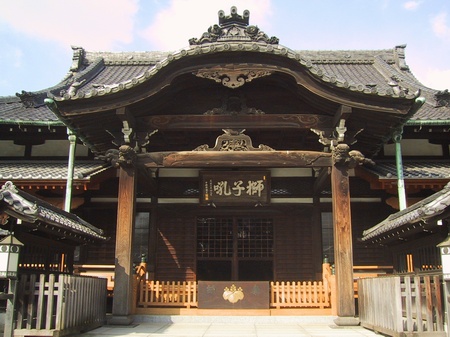
Don't do a trip to a foreign country without some historical knowledge: if European think of Japan, the link it with samurai. This story is known by many Japanese people even nowadays and now I also know it. The reason is that I visited the Sengakuji temple, which belongs to the Soto-Zen school and is one of the main temples of this school.
Picture Source: Own exposure. Sengakuji temple.
The story of the samurai happened like follows: Asano Naganori has been a daimyo working for the shogun in 1701 and it was his task to organise the new year's welcome ceremony for an envoy of the emperor in Kyoto. Kira Kozukenosuke was ordered to tell him all the details about the ceremony, but he didn't tell him all necessary things, because he wanted to compromise him. This provocation led the daimyo to rise his sword against Kira Kozukenosuke, but without killing him. As it was strictly forbitten to rise a sword at the shogun's residence, the daimyo was faced to his death penalty. As he had to die the same day, Asano Naganori conducted the ritual suicide, which is called "seppuku".
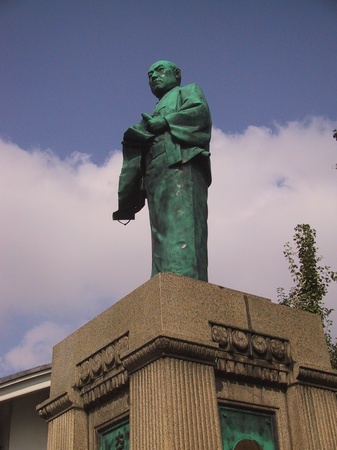
Picture Source: Own exposure. The leader of samurai: Oishi Kuranosuke.
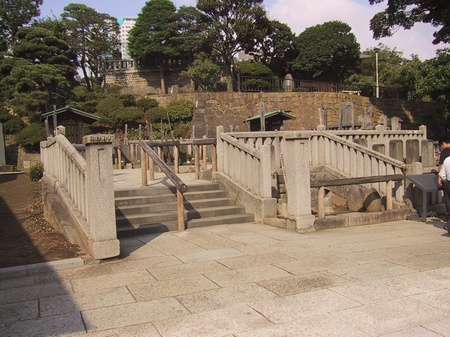
The samurai lost their daimyo and became ownerless "ronin". 47 of the samurais got together to swore revenge to Kira Kozukenosuke, but their plan were kept top secret. These samurais were led by Oishi Kuranosuke and they took revenge on 31. January 1703. For this reason, they also had to conduct "seppuku" and their graves are on the temple area of Sengakuji temple. Although the people and other daimyos were horrified about what has happened, they couldn't change anything. This revenge stands nowadays as a symbol of loyality in the awareness of Japanese people.
Picture Source: Own exposure. Graves of the samurai.