
|- axel.japan.report.live aus tokyo -|
Typically Japanese!
Again and again when going around in Tokyo, I notice things and behaviours, which seem typically Japanese to me. As I don't know, where to begin, the stories are completely mixed.
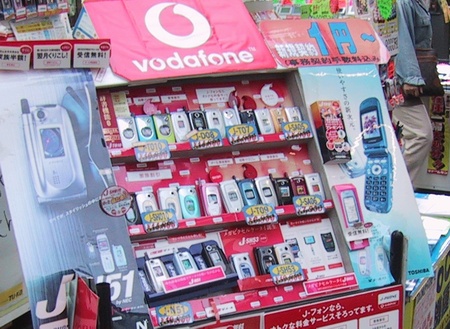
The most obvious thing is: the mobile (phone). It seems that Japanese people can't live without their mobile, impossible. They spend every free second on presenting their mobile to the public. Get it out, take a brief look on the LCD-display outside, open the flap (all mobiles without a flap are out), click around, take a picture if you have the possibility, surf in the internet (which is really fast), close the flap, pocket it. Take a brief glance right and left. Get the mobile out, ...
Picture source: Own exposure. Mobile-mania.
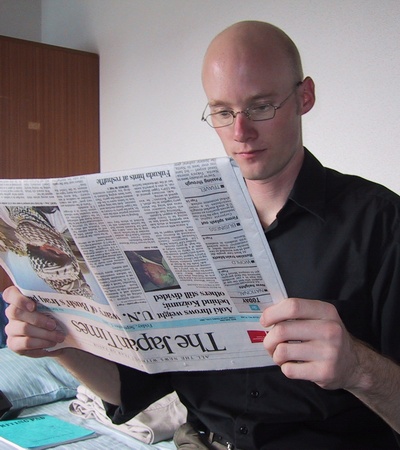
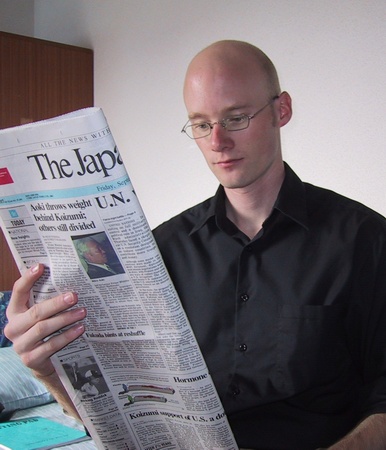
Beside playing around with the mobile (1st place) and sleeping (2nd place), you can often watch people reading a newspaper in subways or trains. The typical behaviour results from the load of subways and trains, in particular during the rush-hour traffic. So, reading a newspaper is inevitably not very easy, because you don't have much space. I decided to present the differnces to the European way of reading to you while testing it by myself. Please do consider that Japanese letters can also be written from top to bottom (and then they are read from right to left).
Picture source: Own exposure. European way of reading a newspaper.
Picture source: Own exposure. Japanese way of reading a newspaper.
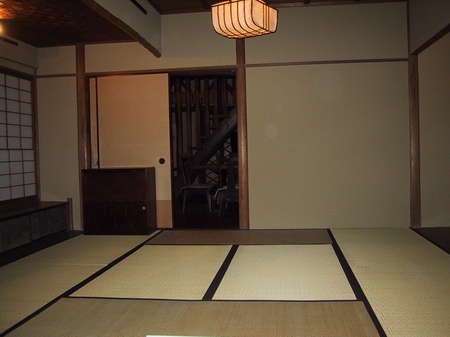
In the section "living" I used the term "tatami" and it is necessary to explain it to you now. This unit of measure is based on the so called tatami mats, which are used in Japanese style rooms traditionally. A mat has a defined size and so the room size can be shown in "tatami".
Picture source: Own exposure. Japanese tatami room.
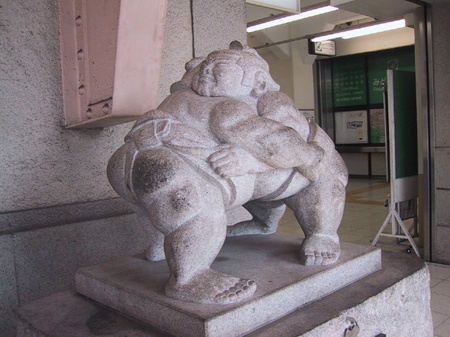
In Japan, you can find a sort of people, which is not coined by fastfood although it looks like this: the sumo-wrestlers. I found the statue below near a sumo hall (kokugikan). In further streets you can find statues showing prints of the hands of famous sumo-wrestlers.
Picture source: Own exposure. Sumo-wrestler statue in Ryogoku.
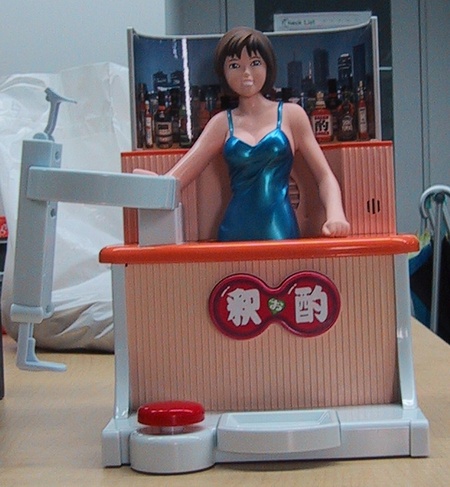
I will present one last typical thing and then it is enough. It is well-known that Japanese people want to make everything perfect and also that they have the drive for substituting each movement by an electronic appliance. The highlight question for those, who have never been to Japan, is: what sensible use does the following appliance has?
Picture source: Own exposure. Great appliance, but what is it for?